
Engineering for Daily Lab Work
Our premium stainless steel sinks are built for engineering daily lab work. Constructed from heavy-gauge material, they offer smooth, scratch-resistant basins that make cleaning heavy tools and glassware effortless.



A Stainless Steel Sink is a durable laboratory utility solution suitable for washing glassware, equipment, and testing accessories. Its corrosion-resistant construction supports long-term use, easy cleaning, and hygienic operations, making it ideal for healthcare, pharmaceutical, food testing, educational, and industrial laboratory environments.
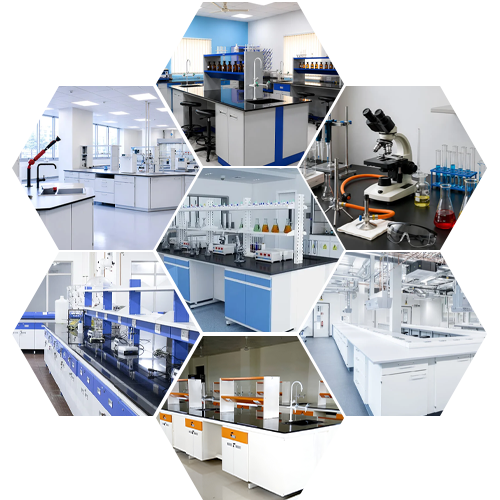
Our premium stainless steel sinks are built for engineering daily lab work. Constructed from heavy-gauge material, they offer smooth, scratch-resistant basins that make cleaning heavy tools and glassware effortless.
At Vilva Lab Furniture, we ensure that every piece of hardware we supply meets high-performance standards. Our stainless steel sinks are a staple for labs that require longevity and easy maintenance. Let us help you complete your workstation with the right plumbing and sink solutions. Contact us today for product details and installation support.
Premium laboratory sinks are built using heavy-gauge Type 304 or Type 316 stainless steel, offering high resistance to chemical corrosion and physical impacts.
They feature seamless, deep-drawn construction or precision CNC laser cutting and continuous argon weld profiling to eliminate sharp internal corners where debris can hide.
Yes, the exterior undersides are coated with a specialized heavy-duty rubberized sound-dampening pad or coating to minimize noise from washing glassware.
It can be seamlessly welded directly into matching stainless steel countertops for a single-piece layout, under-mounted beneath stone slabs, or installed as a convenient drop-in model.
Yes, stainless steel easily handles severe thermal shocks and continuous boiling water loads without warping, cracking, or losing structural integrity.
Type 316 stainless steel contains added Molybdenum, which significantly boosts its resistance to pitting corrosion caused by industrial chlorides, salts, and harsh acids.
No, high-grade stainless steel naturally forms a passive chromium oxide surface layer that prevents rust, though exposure to strong un-neutralized mineral acids should be avoided.
A bright, satin or electro-polished mirror finish is preferred, creating an ultra-smooth surface that resists microbial attachment and simplifies sanitization.
They include a heavy-duty, anti-clogging stainless steel basket strainer plug that captures large solid debris before it can enter the waste trap lines.
Yes, because their completely non-porous surfaces are easy to decontaminate, they are the preferred choice for nuclear medicine and isotope handling rooms.