School Furniture banner
  • Home
  • /
  • Spot Extractor

Spot Extractor

Spot Extractor

Spot Extractor

Spot Extractor

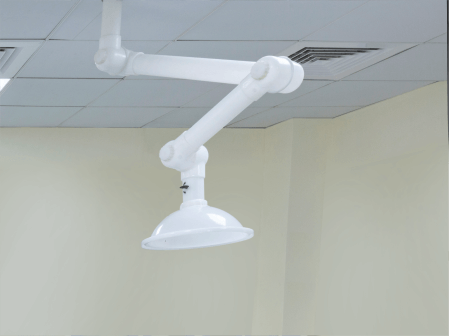
A Spot Extractor provides localized ventilation by capturing fumes, vapors, and airborne contaminants directly at the source. Commonly used in laboratories handling chemicals and testing procedures, it helps improve air quality, enhance operator safety, reduce exposure risks, and maintain cleaner working conditions during daily laboratory operations.

High Quality Spot Extractor

Benefits of Source Capture Extraction

  • Targeted removal: Captures contaminants exactly where they are generated.
  • Flexible positioning: Adjustable arms that allow you to reach any point on the workbench.
  • Space efficient: Compact systems that don't require the footprint of a full fume hood.
  • Improved safety: Reduces inhalation risks and prevents crosscontamination of samples.
Designing for Cleaner Laboratory Air

Our flexible spot extractors are engineered for cleaner laboratory air. The articulated suction arms capture toxic vapors, heat, and airborne chemicals directly at the source before they can spread across the room.


High Quality Spot Extractor
Quality Ventilation Solutions

At Vilva Lab Furniture, we understand that effective ventilation is critical for a modern lab. Our spot extractors are built with durable, chemical-resistant materials to ensure they handle the harsh lab environment with ease. Let our team assess your ventilation needs and provide a system that keeps your staff safe and your air pure. Contact us to learn more about our extraction technology.

Frequently Asked Questions?

1 What is a laboratory spot extractor?

It is a highly flexible, multi-jointed local exhaust ventilation (LEV) arm designed to capture and extract toxic fumes, smoke, vapors, or fine dust directly at the point of origin before they disperse into the room.

3 How does a spot extractor differ from a standard chemical fume hood?

A spot extractor provides localized, mobile extraction for low-hazard processes or small instrument vents, whereas a fume hood offers total physical containment for high-hazard chemical procedures.

5 How is a spot extractor arm mounted inside a modern laboratory?

It features versatile mounting configurations, allowing it to be securely anchored to the ceiling, a nearby wall, or directly onto the laboratory workbench surface.

7 What is the typical diameter of a laboratory spot extractor tube?

Standard laboratory extraction arms are available in diameters of 50mm, 75mm, or 100mm, selected based on the specific volume of air extraction required.

9 What type of maintenance do spot extractor arms require?

Maintenance involves periodic joint tension adjustments, cleaning internal dust deposits, and inspecting the flexible seals to ensure constant aerodynamic suction.

2 What materials are standardly used to construct a spot extractor arm?

The articulation tubes are built from chemical-resistant polypropylene or anodized aluminum, fitted with specialized friction joints and chemical-grade rubber seals.

4 Can the extraction hood shape be customized for different applications?

Yes, they accommodate interchangeable hoods, including wide dome hoods for capturing rising vapors, flat hoods for workbenches, and specialized metal hoods for high-temperature soldering.

6 Does a spot extractor feature a built-in airflow control damper?

Yes, every premium spot extractor arm includes a built-in manual damper valve in the base section, allowing users to adjust or completely shut off the suction velocity as needed.

8 Are there specialized spot extractors available for explosive gas areas?

Yes, specialized anti-static and fully grounded ATEX-certified ESD models are manufactured for use in explosive environments or electronic testing rows.

10 Does a spot extractor require an external exhaust blower system?

Yes, it must be connected via chemical-grade PVC or PP ductwork to a roof-mounted centrifugal exhaust blower to safely vent captured fumes out of the building.