
Durability for Demanding Labs
Our thick polypropylene sinks offer outstanding durability for demanding labs. The solid, non-reactive polymer structure entirely resists aggressive organic solvents, highly concentrated acids, and alkaline stains.



A Polypropylene Sink is manufactured for laboratory environments that require excellent chemical resistance and long-term durability. Suitable for handling acids, reagents, and laboratory cleaning processes, it offers dependable performance, easy maintenance, and reliable functionality for research, industrial, educational, and analytical laboratory applications.
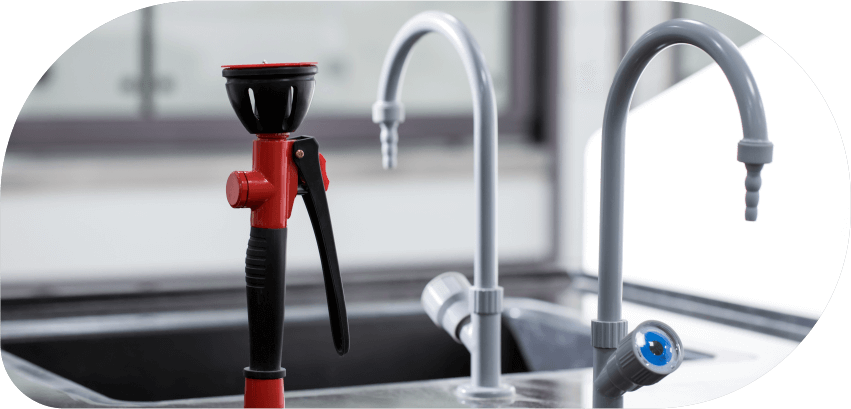
Our thick polypropylene sinks offer outstanding durability for demanding labs. The solid, non-reactive polymer structure entirely resists aggressive organic solvents, highly concentrated acids, and alkaline stains.
Beyond providing the sink, our team provides expert guidance on integrating these units into your lab’s water and drainage systems. We ensure that every installation is watertight and perfectly aligned with your bench work. Whether you are retrofitting a single station or outfitting a new facility, we offer the support you need. Contact Vilva Lab Furniture today to discuss the ideal sink configuration for your laboratory.
Polypropylene (PP) offers absolute chemical resistance to highly aggressive acids, bases, organic solvents, and staining reagents that would quickly pit or corrode stainless steel.
Standard PP sinks handle temperatures up to 80°C continuously and can tolerate brief exposures up to 100°C, making them highly reliable for standard lab activities.
They are outfitted with matching chemical-resistant polypropylene bottle traps, waste overflow pipes, strainer plugs, and flexible anti-corrosive drain lines.
Polypropylene is highly resistant to absorption, meaning chemical dyes, indicator solutions, and biological stains can be easily washed away without permanently discoloring the core material.
Yes, because they do not corrode, chip, or release micro-particles or metallic ions, they are ideal for trace metal analysis labs and sterile cleanrooms.
They are manufactured using advanced injection molding techniques or heavy-duty sheet extrusion and hot-gas welding to form a completely monolithic, seamless core.
No, high-grade polypropylene possesses excellent high-impact elasticity and shock resistance, allowing it to absorb impacts from dropped glassware without chipping or breaking.
It can be seamlessly under-mounted beneath epoxy resin or phenolic tops, or drop-in flush-mounted with specialized chemical silicone sealants to prevent fluid leaks.
They are standardly fabricated in professional laboratory colors, primarily sleek dark gray, matte black, or clean white to match diverse workbench styles.
Yes, they can be directly connected to under-bench PP neutralization or dilution basins that safely lower acid concentrations before wastewater enters municipal sewer lines.